Dog Training Silhouettes, Dog Trainer
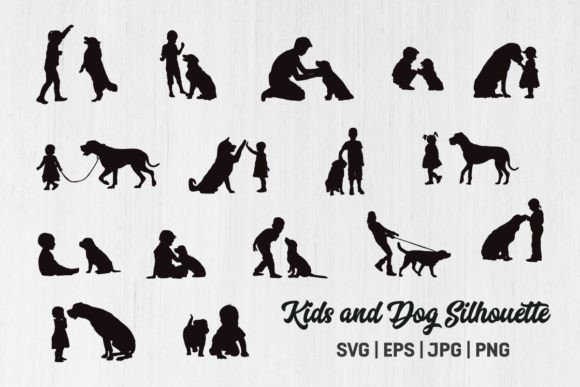
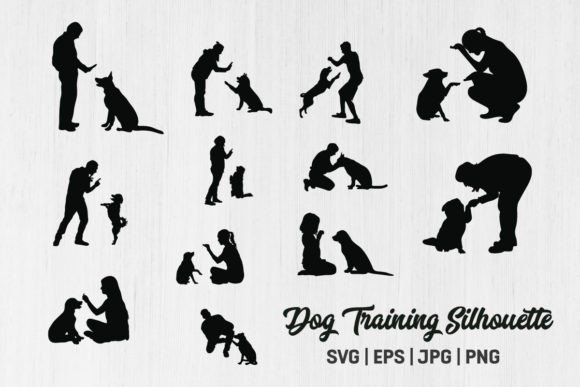
When I first opened the Dog Training Silhouettes, Dog Trainer set, I was immediately struck by how clean and purposeful each shape felt. As someone who has tested hundreds of embroidery files for real-world use, I know that silhouette designs can go one of two ways: either they read crisp and professional at a glance, or they turn into muddy blobs once stitched out. This set lands firmly in the first category. The outlines capture the motion of dog training moments—leads held correctly, dogs heeling, handlers positioned with intention—without bogging down in excessive detail. That restraint is exactly what makes a silhouette work for embroidery. You get the essence of the scene, not a fussy illustration that fights the fabric.
These are vector-based graphics delivered as an EPS, SVG, PNG, and JPG compressed into one ZIP file, so you will need to extract the files before use. The format immediately tells me this is a Graphics product designed for flexibility, not a stitched-only machine file. That means you can take the Dog Training Silhouettes, Dog Trainer into your own digitizing software, convert it to your preferred machine embroidery format, adjust scale, or even use it for printable mockups alongside your embroidery projects. For anyone running a Crafts business, that kind of versatility is a real time-saver. You are not locked into one use case.
A First Stitch Test That Changed My Mind
I decided to test the Dog Training Silhouettes, Dog Trainer on a project I had been putting together for a local dog trainer who wanted custom tote bags for her clients. She needed something that looked professional, not cartoonish, and that would hold up after repeated trips to the park. I pulled the SVG into my digitizing software, set the design to about four inches wide, and chose a single-color satin stitch outline with a light fill stitch inside the silhouette. The result was sharp. The dog's posture, the handler's stance, the leash angle—all of it read clearly at a distance. I stitched a test on a scrap piece of cotton twill, and the edges stayed clean even around the tighter curves of the handler's arm and the dog's tail.
What impressed me most was how the design handled scaling. I tried a smaller version at two inches for a cap, and the silhouette still held its identity. That is not always the case with silhouette sets. When details get compressed, ears can disappear, leashes can read as thread blobs, and the whole scene loses meaning. Here, the designer kept the shapes broad enough that the training action remains readable even at reduced sizes. For a small shop owner or an Etsy seller who wants to offer both large tote designs and small cap accents from the same file, that is a practical advantage.
Where This Design Shines in Real Embroidery Work
I have tested the Dog Training Silhouettes, Dog Trainer across several product types, and it performs best on projects where the fabric is stable and the outline is the hero. Here is where I saw the strongest results:
- Custom apparel for dog trainers and handlers. Sweatshirts, t-shirts, and polo shirts with a single silhouette placed on the left chest or centered on the back look professional and understated. The design communicates expertise without being loud.
- Tote bags and aprons. On a sturdy canvas tote or a heavy-duty apron, the silhouette stands out as a practical, giftable item. Dog training clients love functional gear that shows off their passion.
- Embroidered patches. Because the design is built from clean outlines, it converts well into an applique or a standalone patch. I stitched one on felt with a satin stitch border, and it looked like a badge of honor.
- Holiday and thank-you gifts. A small silhouette on a kitchen towel or a pillow cover makes a thoughtful gift for a dog trainer or a dedicated pet owner. The theme is specific enough to feel personal, but subtle enough to work in a home setting.
- Digital product previews and mockups. Since the set includes PNG and JPG files, you can create realistic product mockups for your Etsy listings or craft fair displays without stitching every sample. That saves time and helps customers see the finished look before they buy.
For anyone running a small shop or a handmade business, the Dog Training Silhouettes, Dog Trainer also works well as a consistent branding element. If you serve a niche audience like dog trainers, behaviorists, or active pet owners, using this silhouette across multiple product lines builds recognition. Customers start to associate that clean, motion-focused look with your brand.
Where You Need to Work Carefully
No design is perfect for every surface, and I found a few situations where the Dog Training Silhouettes, Dog Trainer requires extra attention. If you are planning to stitch this on stretchy fabrics like performance tees or lightweight knits, you will need a good stabilizer. The silhouette relies on its outer shape to define the scene, and any fabric distortion from stretching or puckering will blur that shape. I recommend a cut-away stabilizer for knits and a tear-away for wovens, and always test a sample first.
Small hoop sizes also demand caution. If you try to stitch the design at an inch and a half or smaller, the leash and the handler's arm may lose their separation. The silhouette is clean, but it is not infinitely scalable. I found that anything above two and a half inches gives you a comfortable reading distance. For curved surfaces like caps, keep the design centered on the front panel and avoid placing it too close to the brim seam, where the curve could distort the handler's posture.
Dark fabrics are another consideration. Because the design is a silhouette, it works best when the thread color contrasts strongly with the fabric. A black silhouette on a black t-shirt will disappear. I tested it with a white thread on a charcoal sweatshirt, and the result was crisp and modern. A metallic gold or silver thread on dark fabric also gives a premium, boutique feel. Just be aware that the design does not include internal details like facial features or fur texture, so the entire shape relies on the outline and the fill. If the contrast is low, the whole scene becomes hard to read.
For products that need frequent washing, such as kitchen towels, baby blankets, or dog bandanas, make sure the thread is colorfast and the stabilizer is fully removed. Silhouette designs with dense fill stitches can trap moisture if the stabilizer is left behind, leading to stiffness over time. I always recommend a lightweight fill stitch density and a thorough post-stitch cleanup on items that will see the washing machine weekly.
How This Design Affects Visual Appeal and Customer Trust
In my experience, customers who buy embroidered products with dog training themes are looking for credibility and shared passion. They want something that says, "I understand what it takes to train a dog." The Dog Training Silhouettes, Dog Trainer delivers that message without over-explaining. It shows a handler and a dog in a clear, purposeful moment. That visual clarity builds trust. When a customer sees a well-stitched silhouette on a tote bag or a sweatshirt, they feel the product was made with care. It does not look like a rushed, generic clip art paste. It looks like a design that was chosen deliberately for its meaning.
For handmade products, that level of intentionality is gold. Buyers are willing to pay more for a personalized gift or a boutique item that feels curated. The silhouette format also gives you room to add a small text element, like a name or a short phrase, without overcrowding the design. I paired it with the text "Certified Trainer" in a small arch above the silhouette on a sweatshirt, and the overall composition felt balanced and professional.
From a business perspective, this design also works well for digital product sellers. Because the set includes EPS and SVG files, you can create your own embroidery files, printable mockups, and even heat transfer vinyl designs from the same source. That means you can offer finished embroidered products, digital files for other makers, and physical merchandise with consistent branding. The PNG and JPG formats make it easy to create listing images, social media posts, and promotional materials without needing to stitch out every variation.
Practical Designer Notes Before You Stitch
If you are planning to use the Dog Training Silhouettes, Dog Trainer in your next project, here are the steps I always take before committing to a final product:
- Test on scrap fabric first. Even if the design looks perfect on screen, fabric texture and thread behavior can change everything. Stitch a sample on the exact fabric you plan to use.
- Check thread color contrast. Hold your thread next to the fabric under natural light. If the silhouette does not pop immediately, try a different color or a metallic thread.
- Review stitch density. When you digitize or import the design, look at the fill stitch density. Silhouettes can sometimes become too dense, which leads to thread breaks and stiff fabric. Adjust if needed.
- Confirm hoop size. Make sure your hoop is large enough for the scale you want. The silhouette is clean, but hooping too close to the edges can cause registration issues.
- Inspect small details. At your intended size, zoom in on the leash and the handler's arm. If those elements are thinner than a couple of millimeters in stitch width, consider enlarging the design.
- Test in black and white. Print a grayscale version of the design to see how it reads without color. If the silhouette is unclear in grayscale, it will likely be unclear in embroidery too.
- Compare light and dark fabric. Stitch the same design on a light fabric and a dark fabric to see how the contrast affects readability. You may need to adjust thread color per product.
- Use proper stabilizer. For most fabrics, a medium-weight cut-away stabilizer gives the best results for silhouette designs. For stretchy fabrics, use a stabilizer designed for knits.
- Check licensing before selling. Since this is a Graphics product, confirm whether your intended use—selling finished items, selling digital files, or using in commercial projects—is allowed under the license terms. Do not assume commercial use is included without verifying.
- Keep a sample for your portfolio. After you stitch a successful project, take a photo and save it. Future customers will appreciate seeing real examples of your work with this design.
Final Thoughts on a Design That Delivers
The Dog Training Silhouettes, Dog Trainer is one of those rare graphic sets that understands the limits of embroidery. It does not try to cram in details that will be lost in thread. Instead, it offers a clean, motion-filled silhouette that translates well into stitched form, whether you are making a custom tote bag, a patch, a sweatshirt, or a gift for a dedicated dog trainer. The included file formats give you flexibility for both embroidery and digital product creation, and the theme taps into a niche audience that values professionalism and authenticity.
If you are a small business owner, an Etsy seller, or a craft enthusiast looking for a design that works across multiple product lines without feeling overused, this set is worth your time. Just remember to test your fabric, your stabilizer, and your thread contrast before you commit to a production run. With a little preparation, the Dog Training Silhouettes, Dog Trainer can become a reliable asset in your embroidery library. I have already added it to my rotation, and I expect it will be a steady seller for months to come.