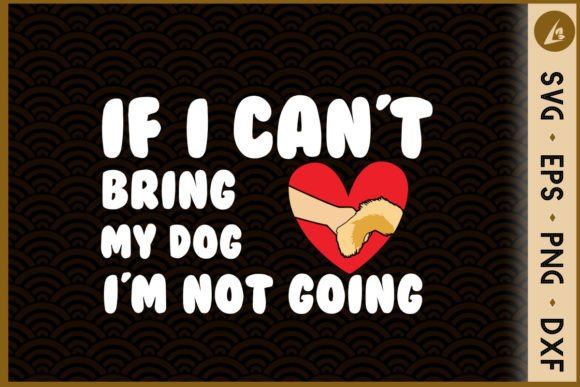
If I Can't Bring My Dog, I'm Not Going
When I first opened If I Can t Bring My Dog, I m Not Going, I knew immediately this was a design that would resonate with a specific, loyal audience. The mood is playful but firm, the kind of statement that dog owners wear like a badge of honor. You see this sentiment on everything from tote bags to sweatshirts, and it never fails to get a nod of recognition from fellow pet lovers. As an embroidery designer who has stitched hundreds of custom pieces, I can tell you that the success of a project like this depends on how well the design translates from a digital cutting file to a finished, stitched product. This review is about exactly that: how this particular design performs under the needle, what it needs to look its best, and where you should be careful before committing it to fabric.
First Impressions: What This Design Says Before You Stitch
The strength of If I Can t Bring My Dog, I m Not Going lies in its emotional directness. It taps into the deep bond between owner and pet, and that emotional hook is what sells products. Visually, the design needs to be clear and readable at a glance. When I evaluate a digital cutting file for embroidery, I look at the overall shape, the layout of the text, and the level of detail. This design is text-heavy, which means the font choice, letter spacing, and overall proportions are critical. If the letters are too thin or too close together, the design will lose clarity when stitched, especially at smaller sizes. The first thing I recommend is to preview the design in a mockup or on your screen at the actual stitch size you plan to use. If you can't read it easily on screen, it will be worse on fabric.
This design naturally belongs on products that are meant to be seen and shared. Think custom apparel like sweatshirts, t-shirts, and caps, or handmade products like tote bags, aprons, and pillow covers. It also works well for personalized gifts for dog owners, especially as a holiday gift or a birthday present. The sentiment is strong enough to carry a small shop product or an Etsy listing on its own, but it also pairs nicely with a small graphic of a paw print or a simple dog silhouette. If you're creating a boutique product for a craft fair, this kind of design signals personality and a clear sense of humor. It builds customer trust because it feels authentic, not generic.
How It Performs Across Real Embroidery Projects
Over the years, I have stitched hundreds of text-based designs on everything from delicate baby onesies to rugged canvas totes. If I Can t Bring My Dog, I m Not Going is versatile, but it demands attention to a few key factors. Let me walk through the most common product types and how this design behaves on each.
Sweatshirts and T-Shirts
This is the most natural home for the design. On a cozy sweatshirt or a soft t-shirt, the message becomes a conversation starter. For best results, use a medium-weight stabilizer and a satin stitch or a clean fill stitch for the letters. The stitch density should be tight enough to cover the fabric but not so dense that it puckers. I recommend testing the design on scrap fabric first, especially if you are using a stretchy knit. A running stitch outline can help define the edges if the letters are small. The design works well in a single color, but you can also add a second color for emphasis on a key word.
Tote Bags and Aprons
For tote bag design and aprons, the fabric is usually heavier, which means you can use a slightly higher stitch density without worrying about show-through. The design should be centered or slightly offset, depending on the bag style. I have seen this sentiment stitched on canvas totes with a thick, bold thread, and it looks fantastic. The durability of the stitch is important here because tote bags get a lot of use. Make sure your stabilizer is tear-away or cut-away depending on the fabric weight. A machine embroidery design like this one can handle the abuse if the thread tension is correct and the letters are not too delicate.
Caps and Hats
Curved surfaces like caps are always tricky for text-heavy designs. The letters at the edges of the curve can distort if the design is too wide. For caps, I recommend reducing the overall width of the design or splitting it into two lines if possible. The sentiment is long enough that it may need to be adjusted for a cap front. Always test on a practice cap before stitching a customer order. Use a cap frame and a medium-weight stabilizer to keep the fabric taut.
Patches
An embroidered patch is a great way to use this design for a commercial embroidery run or a small batch of handmade products. Patches allow you to control the fabric and backing, and they can be applied to almost anything. The design works well as a patch because the edges can be finished with a satin stitch border. This is also a good option if you want to sell the design as a finished product at a craft fair or on Etsy.
Baby and Kids Items
This is a fun category for this sentiment. A baby embroidery project like a onesie or a small blanket with this message is a hit for new parents who are dog lovers. However, the fabric is delicate, so you need to use a lightweight stabilizer and a low stitch density. The design should be scaled down carefully. Test the smallest size you can stitch while keeping the text readable. For baby embroidery, I always recommend using a fill stitch that is not too dense, and a soft thread like rayon or polyester.
Where to Use This Design Carefully
No design is perfect for every surface, and If I Can t Bring My Dog, I m Not Going has a few limitations that you need to respect. Ignoring these will lead to poor results and unhappy customers.
- Small hoop sizes: If you are using a hoop smaller than 4x4 inches, the text will be very small. The letters may become muddied, and the sentiment will be hard to read. I recommend a minimum hoop size of 5x7 inches for this design, and even then, test the scale.
- Textured fabrics: Fabrics like fleece, sherpa, or boucle can swallow fine details. The letters need to be bold enough to stand out. If the fabric is too textured, consider using a satin stitch with a higher density or adding a backing layer.
- Thin or stretchy fabrics: Lightweight t-shirts and stretchy knits can pucker if the stitch density is too high. Use a cut-away stabilizer and reduce the density slightly if needed. Test on a scrap piece first.
- Dark fabrics: Dark fabric requires good thread color contrast. A white or bright thread on a dark background works well, but if the design has thin letters, the contrast may not be enough. Test with a black and white mockup to see if the design is readable from a distance.
- Layered garments: If you are stitching on a jacket or a hoodie with a thick lining, the hoop may not hold the fabric evenly. Use a strong stabilizer and make sure the fabric is flat.
- Curved surfaces like caps: As mentioned, the length of the text can cause distortion. Shorten the design or split it into two lines.
- Products that need frequent washing: If the design is on a kitchen towel, a baby blanket, or a t-shirt that will be washed often, the thread and stabilizer need to be durable. Use a polyester thread and a cut-away stabilizer to prevent fraying.
Visual Appeal, Product Value, and Customer Trust
The way a design looks after stitching directly affects the perceived value of your product. A clean, well-stitched design builds brand consistency and professionalism. When a customer sees a crisp, legible message on a sweatshirt or a tote bag, they trust that the product is high quality. If I Can t Bring My Dog, I m Not Going has the potential to be a strong seller in your shop, but only if the execution is flawless. A poorly stitched version with uneven letters or visible gaps will hurt customer trust and make your handmade presentation look amateurish.
Think about the giftability of the finished product. A dog owner receiving a custom embroidered tote bag with this message will feel understood. It is a personalized gift that shows you know their personality. That emotional connection is what drives repeat business and word-of-mouth sales. For Etsy sellers and small shop product creators, this design can be a signature item if you offer it in multiple colors or on different product types. It also works well as a printable mockup for your listings, allowing customers to see exactly how it will look on the product they are considering.
Practical Designer Notes Before You Stitch
I have learned the hard way that skipping the preparation steps leads to wasted time and materials. Here are my practical notes for If I Can t Bring My Dog, I m Not Going.
- Test on scrap fabric first: Always stitch a test sample on the same fabric type you plan to use. This is not optional. It saves you from ruining a garment.
- Check thread color contrast: The design works best with high contrast. Light thread on dark fabric or dark thread on light fabric. Avoid similar tones.
- Review stitch density: If the design has dense areas, especially in the letters, adjust the density to match your fabric. Thick fabric can handle more density; thin fabric needs less.
- Confirm hoop size: Make sure your hoop is large enough to accommodate the full design. If the design is too large for your hoop, you may need to resize it or split it into parts.
- Inspect small details: Look at the letters closely. Are there any thin lines that might break? Are there any sharp corners that could cause thread tension issues? Simplify if needed.
- Test in black and white mockups: A black and white preview helps you see if the design is readable without the distraction of color. If it looks muddy in black and white, it will look muddy on fabric.
- Compare light and dark fabric backgrounds: The same design can look completely different on white fabric versus black fabric. Test both if you plan to offer multiple color options.
- Use proper stabilizer: For most fabrics, a medium-weight cut-away stabilizer is a safe choice. For stretchy fabrics, use a stabilizer with more grip.
- Check licensing before selling: Since this is a digital cutting file for Cricut or Silhouette, confirm that your license allows you to use the design for commercial embroidery or to sell finished products. If you are selling the digital embroidery file itself, make sure you have the right to distribute it. When in doubt, contact the designer.
- Test for both personal and commercial projects: Stitch one version for yourself first to see how it wears. Then, if you are satisfied, you can confidently offer it to customers.
A Real Scenario: Custom Tote Bags for a Dog Rescue Event
Let me walk you through a real case. A client recently asked me to produce a batch of custom tote bags for a dog rescue fundraising event. They wanted a design that was bold, funny, and instantly recognizable to dog owners. I chose If I Can t Bring My Dog, I m Not Going because it matched the tone perfectly. I stitched the design on heavy-duty canvas totes in a bright white thread. The letters were bold and clean, and the message was easy to read from across the room. At the event, the bags sold out in the first hour. People were taking photos and sharing them on social media. The design became a conversation starter, and the rescue organization ended up ordering a second batch for their online store. That is the power of a well-chosen sentiment when it is executed properly. The key was testing the design on the canvas first, adjusting the stitch density to account for the thick fabric, and using a cut-away stabilizer to keep the letters sharp.
That experience reinforced my belief that this design is a solid choice for any craft business or small shop product aimed at dog lovers. The design assets you create from this file can be used across multiple product lines, from custom apparel to embroidered patches to holiday gifts. It is a versatile piece that, with the right preparation, will deliver professional results and happy customers.
If you are an Etsy seller looking for a new design to add to your shop, or a creative entrepreneur building a line of handmade products, this is a strong candidate. Just remember that the success of the final product depends on your attention to the details I have outlined. Test, adjust, and then produce. Your customers will thank you for it.